
In structural steel construction, precision isn’t just about producing accurate drawings—it’s about ensuring every fabricated component fits together as intended when it reaches the job site.
One of the most underestimated challenges in steel fabrication and erection is tolerance stack-up. While a few millimeters of deviation may appear insignificant in isolation, those small dimensional variations can accumulate across multiple members, creating alignment issues that delay fabrication, complicate erection, and increase project costs.
As modern construction projects become more complex and schedules become tighter, understanding and managing tolerance stack-up has become essential for fabricators, engineers, and steel detailers alike.
What Is Tolerance Stack-Up?
Every structural steel component is manufactured within an acceptable range of dimensional variation defined by industry standards. Organizations such as the American Institute of Steel Construction (AISC) establish fabrication and erection tolerances to ensure quality while recognizing the practical limitations of manufacturing.
However, when multiple components—columns, beams, connection plates, base plates, and anchor bolts—each vary within their permissible tolerances, the cumulative effect is known as tolerance stack-up.
Although each individual component may meet specification, the combined deviation can create unexpected problems during assembly.
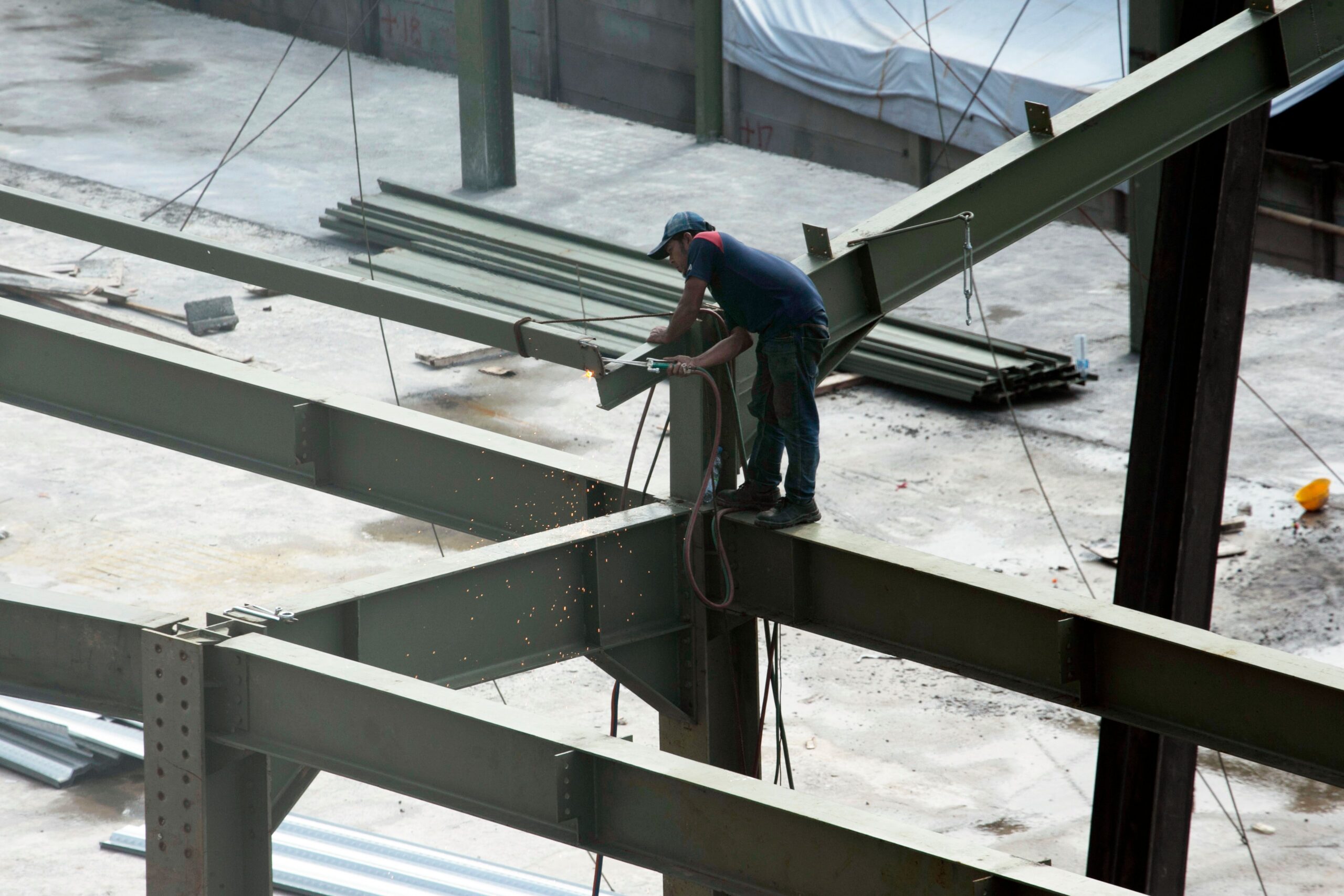
For example, a slight variation in anchor bolt placement, combined with beam length tolerance and connection plate positioning, may result in members that no longer align correctly during erection. Instead of a smooth installation, crews are forced to make field adjustments that consume valuable time and resources.
Why Small Deviations Become Expensive
Tolerance stack-up rarely causes a single isolated issue. Instead, it creates a chain reaction that affects multiple stages of a project.
Common consequences include:
- Connection misalignment
- Fit-up difficulties during erection
- Increased field welding or drilling
- Delayed crane operations
- Additional RFIs and engineering clarifications
- Fabrication rework
- Extended project schedules
These problems often appear only after steel arrives on-site, when corrective actions are significantly more expensive than identifying potential conflicts during detailing.
The financial impact isn’t limited to labor. Delays in steel erection frequently affect subsequent trades, equipment installation, and overall project sequencing, amplifying the cost of relatively small dimensional discrepancies.
Why Accurate Steel Detailing Matters
Managing tolerance stack-up begins long before fabrication starts.
High-quality structural steel detailing ensures that design intent, fabrication requirements, and erection constraints are coordinated within a comprehensive 3D model before production begins.
Experienced detailers evaluate:
- Member geometry
- Connection locations
- Bolt layouts
- Camber requirements
- Fabrication feasibility
- Erection sequence
- Coordination with concrete, mechanical, and architectural systems
By identifying potential dimensional conflicts early, detailing teams help reduce uncertainty before material enters the fabrication shop.
Rather than reacting to problems in the field, project teams can resolve them digitally where changes are faster, less disruptive, and considerably more cost-effective.
The Importance of Constructability Reviews
Constructability reviews play an equally important role in minimizing tolerance-related risks.
During these reviews, steel detailers assess whether components can realistically be fabricated, transported, and erected while maintaining required tolerances.
Questions commonly addressed include:
- Will bolt holes remain accessible during installation?
- Are connection tolerances realistic for field conditions?
- Could cumulative dimensional variation affect member alignment?
- Does the erection sequence increase the likelihood of fit-up challenges?
Addressing these questions early improves coordination between engineers, fabricators, and contractors, reducing costly surprises later in the project lifecycle.
Technology Is Improving Tolerance Management
Today’s detailing workflows provide greater visibility into dimensional accuracy than ever before.
Advanced 3D modeling platforms enable teams to verify connections, detect clashes, visualize erection sequences, and identify potential fit-up concerns before fabrication begins.
Combined with CNC-driven fabrication and digital quality control, these technologies help ensure that fabricated members closely match design intent while supporting more predictable project outcomes.
However, technology alone cannot eliminate tolerance stack-up.
Engineering judgment remains essential for interpreting design requirements, evaluating constructability, and understanding how cumulative tolerances may influence real-world installation.
A Proactive Approach Delivers Better Results
Successful structural steel projects recognize that tolerance management is not solely a fabrication issue—it’s a collaborative responsibility shared by designers, detailers, fabricators, and erection teams.
By addressing dimensional coordination early, validating constructability, and producing highly accurate fabrication-ready models, project teams can significantly reduce rework, improve installation efficiency, and maintain tighter project schedules.
Ultimately, preventing tolerance stack-up is far more cost-effective than correcting it after steel reaches the site.
Conclusion
Tolerance stack-up may be invisible during design, but its consequences become highly visible during fabrication and erection. As projects continue to demand tighter schedules, greater precision, and higher productivity, investing in accurate structural steel detailing is no longer optional—it’s a critical component of successful project delivery.
Early coordination, meticulous detailing, and proactive constructability reviews help transform small dimensional variations from costly field problems into manageable design considerations.
At Steel Step Solutions, we understand that even the smallest dimensional discrepancies can have a significant impact on fabrication and erection. Our experienced detailing team develops precise, fabrication-ready models that account for constructability, coordination, and industry tolerance requirements—helping fabricators and contractors minimize fit-up issues before steel reaches the site. If you’re looking to improve project accuracy and reduce costly field adjustments, connect with our team to discuss how our steel detailing expertise can support your next project.