
Not all structural steel projects are created equal.
While commercial buildings, offices, and retail developments often follow relatively standardized structural systems, industrial and manufacturing facilities present an entirely different level of complexity. From power plants and distribution centers to manufacturing units, warehouses, refineries, and processing facilities, these projects demand a level of detailing precision that extends well beyond conventional steel documentation.
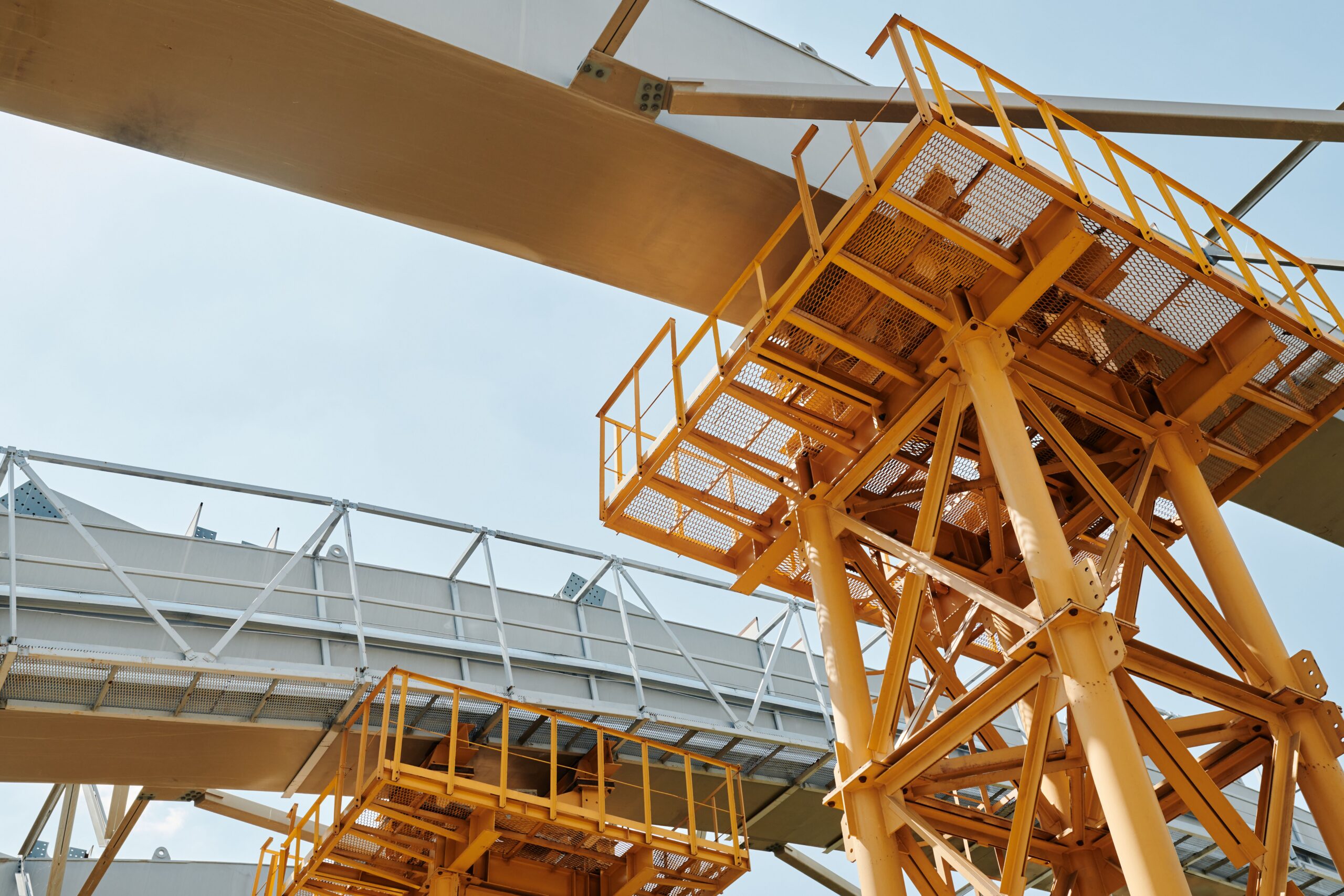
Industrial facilities are designed around production efficiency, operational safety, and equipment integration. Structural steel is no longer just the building framework—it becomes an essential part of supporting machinery, process equipment, utility systems, maintenance access, and future plant expansions.
For this reason, industrial projects require specialized steel detailing that accounts for operational functionality, constructability, and multidisciplinary coordination from the earliest stages of design.
Industrial Projects Are Built Around Operations
Unlike commercial buildings where the structure primarily supports occupants and architectural layouts, industrial facilities are designed to support manufacturing processes.
Steel structures often need to accommodate:
- Heavy process equipment
- Overhead cranes
- Conveyor systems
- Pipe racks
- Cable trays
- Mechanical platforms
- Maintenance walkways
- Future equipment upgrades
Each of these systems introduces unique loading conditions and coordination requirements that directly influence the detailing process.
A single connection detail may affect multiple disciplines simultaneously, making precision and collaboration essential throughout project development.
Coordination Becomes Significantly More Complex
Industrial projects involve far more stakeholders than a typical commercial development.
Structural engineers, mechanical engineers, piping designers, electrical teams, equipment suppliers, process consultants, and fabrication shops all contribute information that ultimately impacts the structural model.
Without coordinated detailing, conflicts can emerge between:
- Structural framing and piping
- Equipment foundations
- Cable routing
- Mechanical clearances
- Maintenance access
- Crane operations
These issues often remain hidden until fabrication or installation, when resolving them becomes considerably more expensive.
Detailed 3D coordination enables project teams to identify and resolve these conflicts long before steel reaches the fabrication shop.
Equipment Support Requires Greater Accuracy
Many industrial structures are designed around equipment rather than occupied space.
This means even small dimensional inaccuracies can create significant operational challenges.
For example:
A support beam positioned slightly outside tolerance may interfere with equipment installation.
An incorrectly detailed platform can restrict maintenance access.
A misplaced connection plate may conflict with process piping.
Unlike commercial projects where adjustments may be relatively straightforward, industrial facilities often have strict operational requirements that leave little room for modification after fabrication.
Accurate detailing minimizes these risks by ensuring structural components align with equipment layouts and installation sequences.
Safety Is Integrated Into Every Detail
Industrial environments demand a higher level of attention to safety throughout both construction and long-term operation.
Steel detailers contribute to this objective by accurately modeling features such as:
- Access platforms
- Stair systems
- Guardrails
- Ladders
- Maintenance walkways
- Fall protection connections
These elements are not secondary additions—they are critical operational components that must comply with project specifications and applicable safety standards.
Early coordination helps ensure safe access for maintenance personnel while reducing costly modifications during commissioning.
Constructability Determines Project Success
Industrial facilities frequently operate under aggressive construction schedules.
Many projects involve phased construction where steel fabrication, equipment installation, and mechanical work occur simultaneously.
Specialized detailing supports these schedules by considering:
- Fabrication sequencing
- Module assembly
- Transportation limitations
- Crane access
- Field connections
- Erection methodology
Rather than simply documenting the structure, experienced detailers evaluate how each component will be fabricated, delivered, and installed.
This constructability-focused approach improves installation efficiency while reducing delays during field operations.
Digital Models Improve Cross-Disciplinary Collaboration
Modern fabrication facilities increasingly depend on digital workflows that connect detailing, procurement, CNC machinery, and
Modern industrial projects increasingly rely on intelligent 3D models rather than isolated 2D drawings.
Model-based detailing allows project teams to visualize the interaction between structural steel and other building systems before construction begins.
This provides significant advantages, including:
- Faster clash detection
- Improved coordination meetings
- Better procurement planning
- Accurate quantity reporting
- Enhanced communication across disciplines
As industrial facilities become more digitally connected, coordinated models are becoming an essential project management tool rather than simply a detailing deliverable.
Specialized Expertise Creates Long-Term Value
Industrial detailing requires more than software proficiency.
It demands an understanding of fabrication practices, equipment integration, structural behavior, and construction sequencing.
Experienced detailing professionals recognize potential coordination issues before they become fabrication problems.
They understand that every connection, opening, support bracket, and platform contributes to the overall functionality of the facility—not just its structural integrity.
This level of technical expertise ultimately reduces project risk while supporting smoother fabrication and installation.
Conclusion
Industrial and manufacturing facilities are among the most demanding structural steel projects in the construction industry. Their success depends on precise coordination between multiple disciplines, accurate detailing, and careful consideration of constructability from the earliest stages of design.
As facilities become larger, more automated, and increasingly integrated with digital construction technologies, specialized steel detailing has become a strategic project requirement rather than a production task.
Organizations that invest in experienced detailing partners gain greater confidence in fabrication accuracy, improve installation efficiency, and create facilities that are built to perform reliably for decades.
Industrial projects leave little margin for coordination errors. At Steel Step Solutions, we deliver specialized structural steel detailing and intelligent 3D modeling for manufacturing plants, warehouses, process facilities, and other complex industrial projects. By combining constructability expertise with precise fabrication-ready models, we help project teams improve coordination, minimize installation challenges, and keep critical schedules on track. If your next industrial project demands accuracy from day one, our team is ready to support you.