
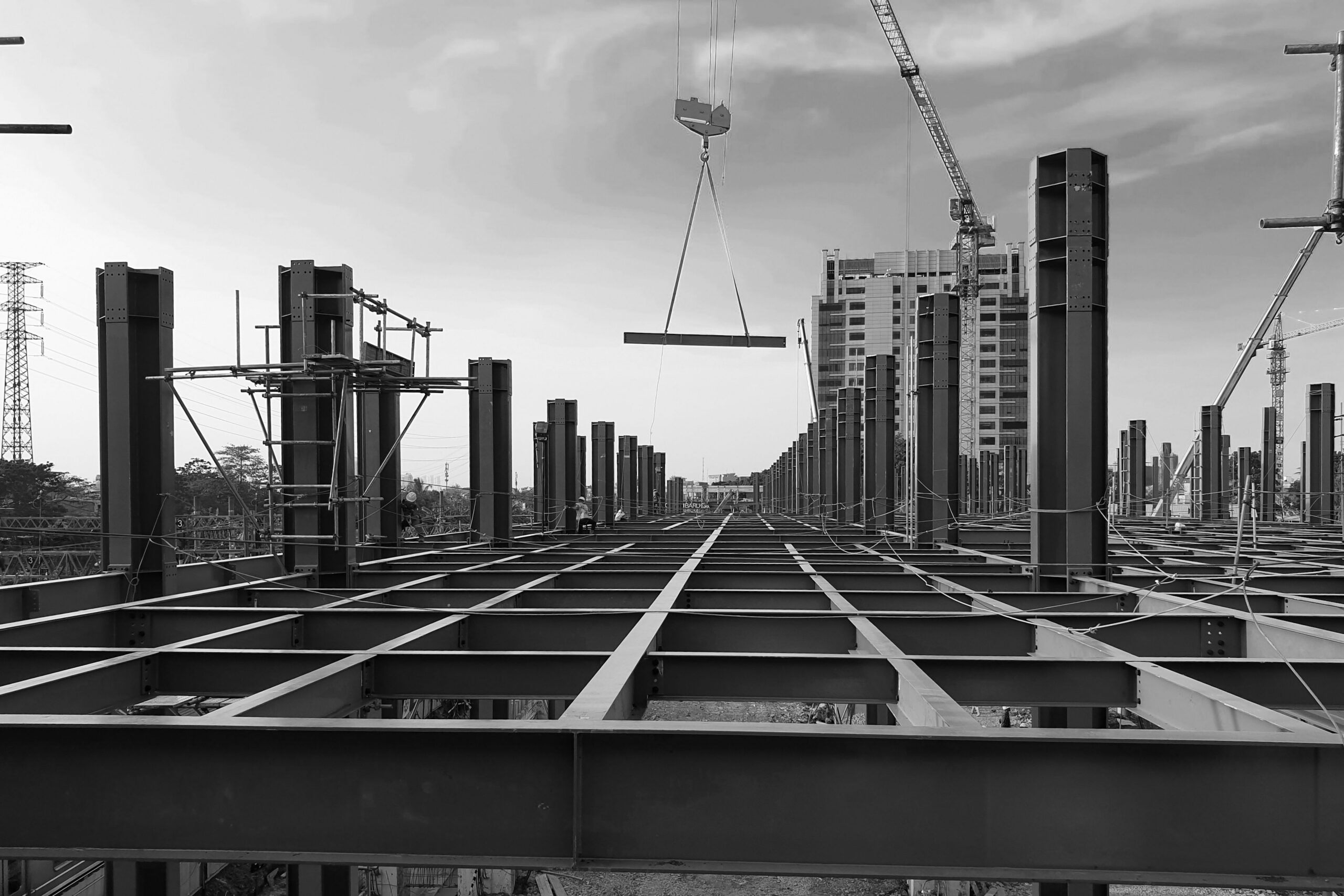
Many construction projects don’t fall behind schedule because of fabrication issues—they fall behind because coordination starts too late.
By the time conflicts surface on-site, every stakeholder is already paying for them: fabricators face rework, project managers deal with cascading delays, and erection crews wait for revised drawings.
In structural steel projects, delays are cumulative. A single unresolved issue can disrupt several downstream activities and create schedule bottlenecks throughout the project lifecycle. Early coordination is no longer a best practice; it’s a competitive advantage. Research on engineering project networks shows that delays can propagate across multiple dependent activities, amplifying their impact on overall project performance.
1. Small Coordination Gaps Become Expensive Site Problems
Common issues include:
- Missing dimensions
- Incomplete connection details
- MEP clashes
- Unclear member sequencing
- Conflicting structural drawings
Resolving these during erection can be exponentially more expensive than resolving them digitally during preconstruction.
2. Early Coordination Creates a Single Source of Truth
When steel detailers participate early:
- Fabricators receive accurate shop drawings
- Engineers validate constructability faster
- Project managers gain schedule visibility
- Erection teams understand sequencing requirements
Model-centric workflows significantly reduce manual intervention and improve data handoffs between detailing and fabrication teams.
3. BIM Coordination Helps Identify Problems Before They Exist
3D models enable teams to:
- Detect clashes
- Validate clearances
- Verify connection feasibility
- Coordinate MEP systems
Addressing these issues digitally prevents expensive field modifications later.
4. Early Detailing Reduces RFIs and Rework
Industry experts consistently emphasize addressing missing information before detailing begins rather than embedding unresolved questions into approval drawings. This prevents ownership confusion and protects schedules.
Benefits include:
- Faster approvals
- Fewer revisions
- Reduced fabrication interruptions
- Improved material planning
5. Faster Projects Are More Predictable Projects
Early coordination enables:
- Better procurement planning
- Stable fabrication schedules
- Improved erection sequencing
- Reduced schedule risk
The objective isn’t simply speed; it’s predictability.
At Steel Step Solutions, we integrate steel detailing, 3D modeling, and preconstruction coordination early in the project lifecycle to help fabricators and contractors identify issues before they become costly site delays. If your team wants fewer RFIs, smoother fabrication, and more predictable schedules, let’s coordinate before steel reaches the shop floor.
Steel Step Solutions is a structural steel detailing and 3D modeling partner serving fabricators, EPC firms, engineers, and contractors globally. Our expertise includes SDS2 modeling, shop drawings, erection drawings, BIM coordination, and fabrication-ready deliverables that reduce project risk, improve accuracy, and accelerate construction schedules.