

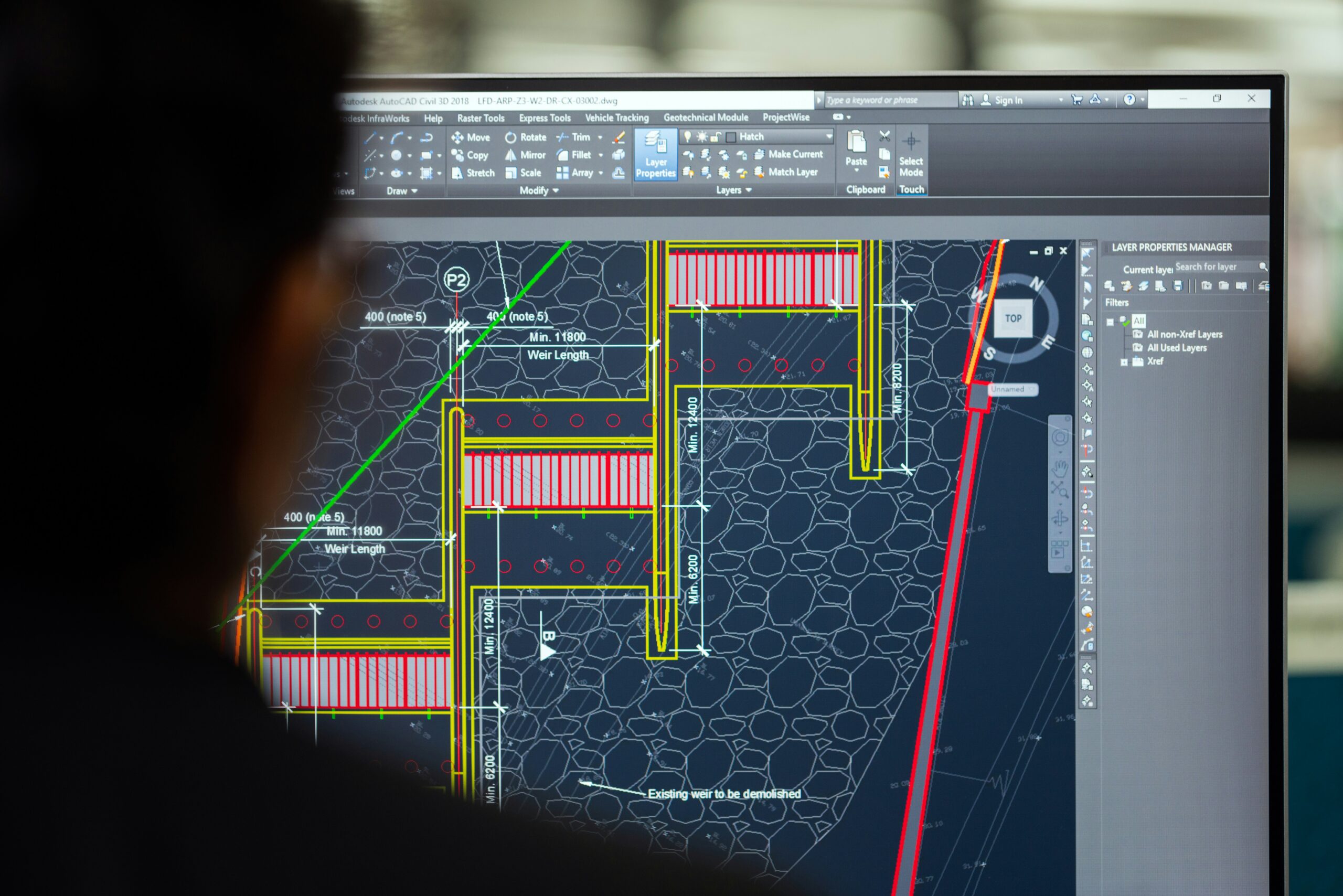
Behind the Scenes: A Day in the Life of a Precision Steel Detailer
When people see a completed steel frame rising on a construction site, they usually see the result—not the detailed coordination that made it possible.
Long before a beam reaches the fabrication shop or an erector connects a column in the field, a steel detailer has already worked through thousands of dimensions, connections, members, plates, bolts, welds, and interfaces.
That is where precision steel detailing comes in.
A steel detailer’s job is not simply to convert engineering drawings into shop drawings. The role connects structural design with fabrication and erection, helping turn design intent into information that can actually be manufactured and assembled.
So what does a typical day look like?
1. The Day Starts With Project Information
Before modeling begins, the detailer reviews the information received from the project team.
This may include structural drawings, architectural drawings, specifications, design models, connection requirements, revisions, and project-specific detailing standards.
The first objective is to understand the project—not just start drawing.
A detailer looks for information that could affect fabrication or erection, including:
- Structural grids and elevations
- Member sizes and orientations
- Framing conditions
- Connection requirements
- Openings and penetrations
- Existing or adjacent structures
- Architectural interfaces
- Revision history
- Project-specific fabrication requirements
This initial review establishes the foundation for the modeling process.
2. 3D Modeling Turns Design Intent Into a Buildable Structure
Once the project information is understood, the detailer moves into the 3D model. Members are placed according to the engineering design, but the model must also accurately represent how those members will connect and ultimately be fabricated.
Columns, beams, braces, stairs, plates, embeds, miscellaneous steel, and other components are developed into a coordinated structural model. Modern steel detailing platforms such as SDS2 support 3D modeling, automated connection workflows, model coordination, and fabrication-oriented outputs.
But software does not replace detailing judgment.
The detailer still needs to understand framing conditions, connection behavior, constructability, fabrication requirements, and erection access.
3. Connections Receive Detailed Attention
A large part of the detailer’s day can involve connection development.
A connection may look straightforward in a design drawing but become significantly more complicated when all the surrounding steel is modeled. The detailer needs to account for plates, bolts, welds, stiffeners, cope conditions, clearances, access, and member geometry.
This is also where conflicts can become visible. A beam connection that appears acceptable in isolation may interfere with another member, clash with a plate, create bolt-access issues, or require a modification to suit the actual framing condition.
The objective is to resolve these issues digitally rather than allowing them to become fabrication or field problems.
4. Coordination Is an Ongoing Process
Steel detailing does not happen in isolation.
The detailer may coordinate with structural engineers, fabricators, architects, MEP teams, general contractors, and erectors depending on the project.
A typical review can involve questions such as:
Does the steel fit?
Can it be fabricated?
Can the connection be installed?
Is there enough access for bolts and welds?
Does the steel interfere with another system?
Does the model reflect the latest approved design?
This makes BIM coordination an important part of the workflow.
The detailer’s model becomes a communication tool between design, fabrication, and erection. Industry guidance also recognizes detailing as a central link between these stages, with issues identified during detailing needing coordination before fabrication proceeds.
5. Clash Detection Helps Catch Problems Early
Once the model develops, the detailer reviews it for clashes and constructability issues. Some problems are obvious. Others are small but can create significant downstream consequences.
Examples include:
- Beam-to-beam conflicts
- Connection plate interference
- Bolt-access restrictions
- Member clearance issues
- Incorrect framing elevations
- Conflicts with openings or penetrations
- Misaligned members
- Problems at interfaces with other trades
Digital model review provides an opportunity to identify these conditions before material is cut or assembled. That is one of the fundamental advantages of a model-based detailing workflow.
6. Drawings Are Where Model Information Becomes Shop Information
After the model has been coordinated, the detailer produces the drawings required for fabrication and erection.
These may include:
- Anchor bolt plans
- Erection drawings
- Assembly drawings
- Single-part drawings
- Material lists
- Connection details
- Weld information
- Bolt information
- Piece marks and other fabrication references
The drawing must communicate enough information for the next person in the workflow to understand exactly what needs to be fabricated or installed. A clean drawing is therefore not simply a presentation requirement. It is part of the project’s production information.
Current steel detailing software workflows increasingly connect the 3D model with shop drawings, erection drawings, reports, and fabrication/CNC information rather than treating each deliverable as a separate data source.
7. QA/QC Is the Final Check Before Release
Before drawings are issued, the detailer or checker reviews the work.
This stage can involve checking dimensions, member marks, connections, material specifications, welds, bolts, drawing consistency, model conditions, revisions, and coordination comments. The goal is simple: identify problems before the information reaches the fabrication floor.
A strong QA/QC process is especially important because a mistake discovered during detailing can generally be corrected digitally. The same mistake discovered after fabrication may involve additional material, labor, schedule impact, or field rework.
8. The Work Continues After the Drawings Are Issued
A precision steel detailer does not necessarily disappear once the drawing package is released.
Fabricators and project teams may raise questions. Engineers may issue revisions. Site conditions may require clarification. Erection teams may identify an issue that needs to be reviewed. The detailer can therefore remain part of the communication chain between the model, drawings, fabrication shop, and field team.
This feedback loop is valuable because it helps keep project information aligned as the structure moves toward completion.
Precision Is a Workflow, Not Just a Drawing Standard
The phrase precision steel detailing can sound like it is only about accurate dimensions.
In reality, precision begins much earlier.
It starts with understanding the design information, continues through 3D modeling and connection development, extends into coordination and clash detection, and finishes with accurate fabrication and erection documentation.
Every stage contributes to the final result. For the fabricator and erector, the value of a detailer is therefore not simply the number of drawings produced. It is the quality of information delivered before steel reaches the shop and jobsite.
At Steel Step Solutions, our focus is on developing coordinated 3D steel models and fabrication-ready detailing that connects engineering intent with the practical requirements of fabrication and erection. When the model is accurate, coordinated, and properly reviewed, the entire steel workflow has a stronger foundation.